You've probably noticed it — every tech company, startup pitch deck, and LinkedIn post is talking about "agentic AI." It's the phrase of the year. But unlike most buzzwords, this one's actually doing something real.
And the difference between understanding it and not understanding it might matter more than you think — especially as companies quietly restructure entire workflows (and yes, entire teams) around it. So let's cut through the noise.
Wait, Isn't All AI "Agentic"?
Nope — and this is the key thing most explainers skip. The AI you've been using for the past couple of years — ChatGPT, Gemini, Claude — is generative AI. You type a question, it gives an answer. It's reactive. It waits for you to drive.
Agentic AI is different. Unlike traditional AI that waits for prompts, agents act on their own. They make decisions, execute tasks, and call tools across systems with minimal human oversight.
Generative AI: answers questions. | Agentic AI: completes goals. One talks, the other does.
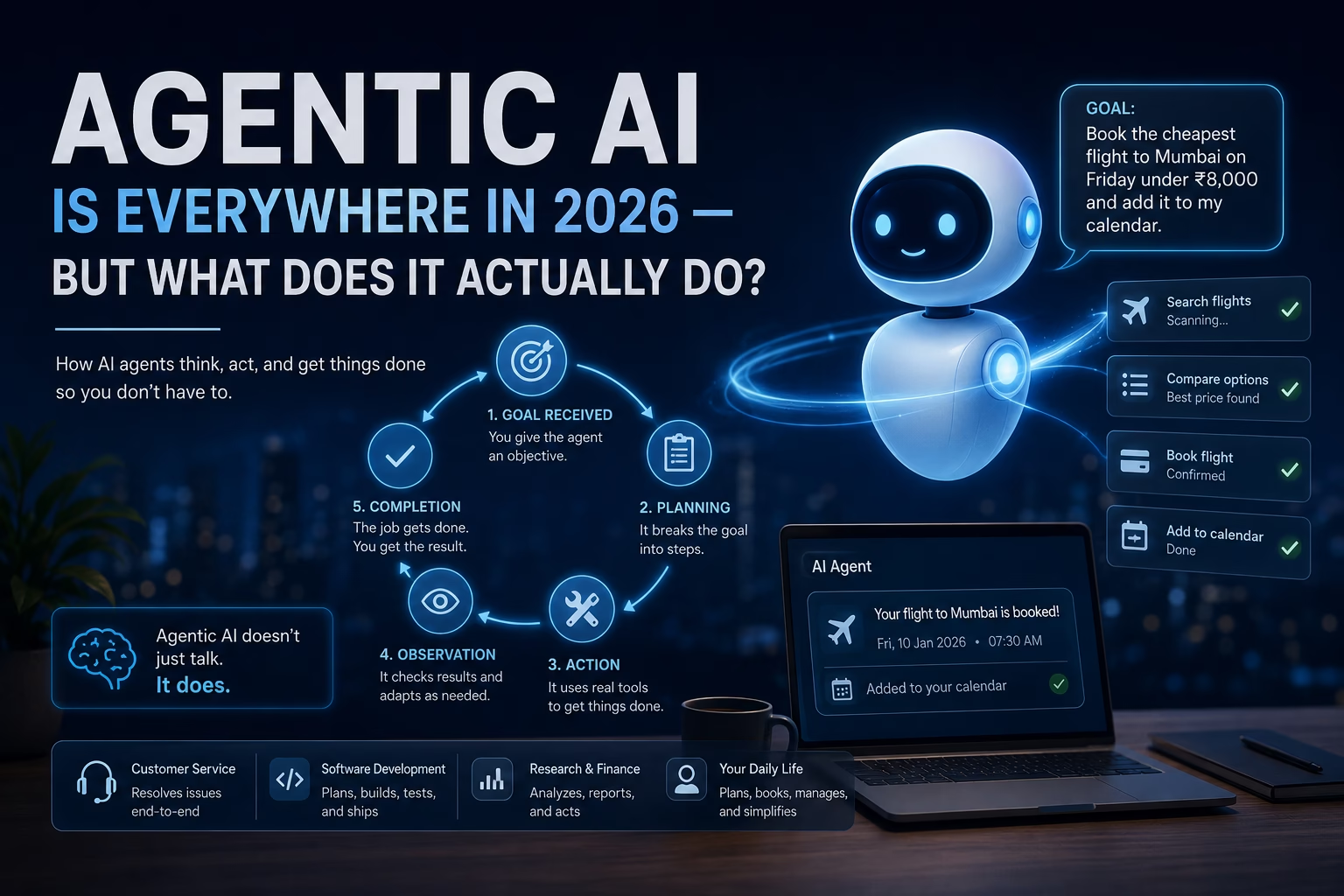
Think of it this way: asking a chatbot "what flights are available to Mumbai on Friday?" is generative AI. Telling an AI agent "book me the cheapest flight under ₹8,000 and add it to my calendar" — and watching it actually do it — that's agentic AI.
How Does It Actually Work?
Under the hood, agentic AI runs on a loop. It plans steps, calls real tools (APIs, files, browsers, code), watches what happens, and adjusts — repeating until the task is done.
The 4-step agent loop
- Goal received — You give the agent an objective ("research competitors and summarize pricing").
- Planning — It breaks that into steps: search the web, visit sites, pull pricing, compare, draft summary.
- Action — It executes each step using real tools: browsers, databases, spreadsheets, email.
- Observe & adapt — It checks if each step worked. If not, it pivots and tries again until done.
"Agentic AI doesn't just talk — it acts, adapts, and executes. The first wave of AI helped you think. The second wave helps you do."
— warisweb.comWhere Is This Happening Right Now?
The companies going all-in on agentic AI aren't small experiments. Cloudflare cut 1,100+ jobs citing a 600% increase in internal AI usage in just three months. Meta, Amazon, Microsoft, and Alphabet committed roughly $725 billion in AI infrastructure for 2026 alone.
In Customer Service
Instead of a bot that says "I didn't understand that," an agentic system looks up your order, checks warehouse status, processes your refund, and sends a confirmation — no human agent involved.
In Software Development
Developers are shifting from writing code to orchestrating AI agents that write, test, and review code. The engineer's job is becoming more about system design and less about syntax.
In Finance & Research
Agentic AI is running literature reviews across millions of papers, managing sales pipelines, monitoring investment portfolios, and as of this week — Anthropic launched AI agents that build pitch books and credit memos for financial teams.
Only 17% of organizations have deployed AI agents so far, yet 60%+ plan to within two years — the fastest adoption curve of any emerging tech. That's a lot of rushing without guardrails in place.
What Nobody's Really Talking About
Here's my honest take. Most of the agentic AI conversation happens in boardrooms and developer forums. The narrative is almost always about enterprise productivity: faster pipelines, leaner teams, lower costs.
What gets far less attention is trust. When an AI agent books a flight, sends an email, or makes a purchasing decision on your behalf — who's responsible if it gets it wrong? A single user request can fan out into dozens of agent actions in seconds, and most current identity and security systems weren't designed to track or contain that.
Agentic AI isn't dangerous — but the hype is moving faster than the safety infrastructure. That's a pattern we've seen before in tech, and it rarely ends cleanly. Keep your eyes open.
What Does This Mean For You?
Whether you're a freelancer, a manager, or just someone who uses the internet — here's the real takeaway:
- Companies are using AI to automate parts of jobs, not necessarily entire roles — at least for now.
- The parts going first: repetitive, process-heavy, multi-step tasks that eat time but don't need creative judgment.
- Your moats: relationship-building, creative strategy, ethical judgment, cultural nuance.
- Learning to work with agentic tools — giving them good goals, reviewing outputs critically, catching mistakes — is one of the most useful skills you can build this year.
Frequently Asked Questions
Everything you wanted to know but were afraid to Google.